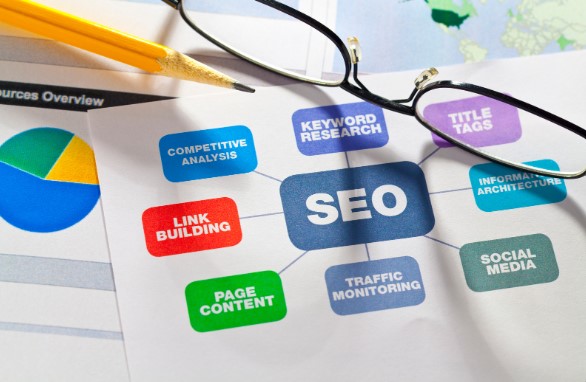
 Are you looking for simple SEO tips to help your website rank better on search engine results pages? You’ve come to the right place. While the fundamentals of SEO can seem daunting, there are actually some easy steps that anyone can take to ensure their site receives more organic traffic from Google and other major search engines. Read on for our top 10 simple SEO tips that will have a big impact on your rankings!
Perform keyword research and use relevant keywords in your content
In today’s digital world, businesses are always competing for online visibility and relevancy. One of the key tactics that can help businesses achieve this is performing keyword research and using those relevant keywords in their content. With the right keywords, businesses can ensure that their website and content show up in relevant search results, thus increasing their chances of being seen by potential customers. But it’s not just about slapping a bunch of keywords together in a piece of content. Proper research and implementation are critical to getting the most out of this strategy. So, if you want your business to stand out online, start by conducting thorough keyword research and incorporating those relevant keywords into your content.
Optimize page titles, meta descriptions and H1 tags
When it comes to optimizing your website for search engines, there are a few key elements you need to pay attention to – namely, page titles, meta descriptions, and H1 tags. These are all important factors that search engines use to determine what your page is about, and how it should be ranked in search results. A strong page title should include targeted keywords while being concise and attention-grabbing. Meta descriptions should give a brief summary of what the page is about, and be written in a way that encourages users to click through to your site. The H1 tag is used to indicate the main heading on your page, and should also include targeted keywords. By optimizing these elements, you can help ensure that your website is easily found and understood by both users and search engines alike.
Create quality content that is easy to read and share
In the world of content creation, quality is king. But even the most well-crafted piece of content can fall flat if it’s not presented in a way that’s easy to read and share. That’s why it’s important to consider both the content itself and the format in which it’s presented. When creating content, write with clarity and purpose, using simple language and concise sentences to get your message across. And when it comes to formatting, think about how you can make your content visually appealing and easy to skim. By doing so, you’ll not only create content that your audience will enjoy reading, but you’ll make it more likely to be shared with others, amplifying your message and helping to grow your audience.
Update existing content regularly with fresh information
Keeping your website up to date with fresh content is vital for attracting and retaining website visitors. By providing your audience with relevant and current information, you will increase the chances of them returning to your site and engaging with your brand. Updating your content regularly also shows search engines that your website is active and can improve your SEO rankings. Ensuring that your website has fresh content can be achieved through various methods, such as adding new blog posts, updating existing pages, or featuring up-to-date news and events. By making a concerted effort to regularly update your content, you will establish your website as a reliable source and create a positive impression on your audience.
Utilize internal linking strategies to link pages on your website together
As a website owner, driving traffic to your website is crucial for its success. While you may focus on external link-building strategies, utilizing internal linking is just as important. Internal linking refers to the practice of linking pages within your website to one another. Implementing an internal linking strategy can not only help your visitors navigate your site more easily, but it can also help search engines understand the structure and hierarchy of your content. By linking relevant pages together, you can improve the overall user experience and increase the likelihood of visitors staying on your site longer. So, take the time to plan out your internal linking strategy and watch as your website traffic and engagement soar.
Use external links to other websites for reference when appropriate
In addition to building internal links, linking out to external websites can also be beneficial for your website. Linking out to other authoritative websites not only provides useful context and support for your own content, but it also helps you establish yourself as an authority within your field. However, it is important to link out judiciously – make sure that the sites you are linking to are reputable and relevant to the topic at hand. By providing readers with quality resources from external sites, you will create an engaging experience that encourages users to keep coming back.
Focus on optimizing for user intent instead of individual keywords
When it comes to SEO, keyword optimization is still essential; however, in recent years user intent has become increasingly important as well. Instead of using individual keywords, focus on creating content that caters to the user’s intent. Try to anticipate what questions your audience may have and create content that answers them in a concise and comprehensive manner. This will help you attract more organic traffic as well as build credibility with your visitors. Remember, search engines are looking for websites that provide an engaging experience for their users, so make sure you keep this at the forefront of your SEO efforts.
Link Building Still Matters!
Even though link building may have gotten a bad rap in recent years, it is still an important factor when it comes to SEO. Building high-quality links from reputable sources is essential for improving your website’s rankings and visibility. When reaching out to other websites, make sure you are providing them with something of value – such as helpful content or resources – that they would be interested in linking to. Not only will this improve your chances of getting the link, but it will also help build relationships with other websites that could benefit you down the line.
SEO strategies are unique and ever-changing and require careful monitoring to stay up to date with new trends. With such a diverse set of factors in play, it can be difficult for businesses to manage their own SEO campaigns without help. However, armed with the right set of knowledge and tools – like those discussed above – business owners can effectively measure, optimize and improve their website’s search engine rankings. While there is no single recipe for SEO success, these strategies and tactics are essential for any website that wants to gain visibility in major search engines like Google and Bing. With consistency, discipline and dedication you will be able to achieve SEO success in the long term!